
How to Choose a Saree Blouse: Fit, Fabric and Design
A practical guide to blouse fit, fabric, neckline, sleeves and finishing—built around movement and the saree you plan to wear.
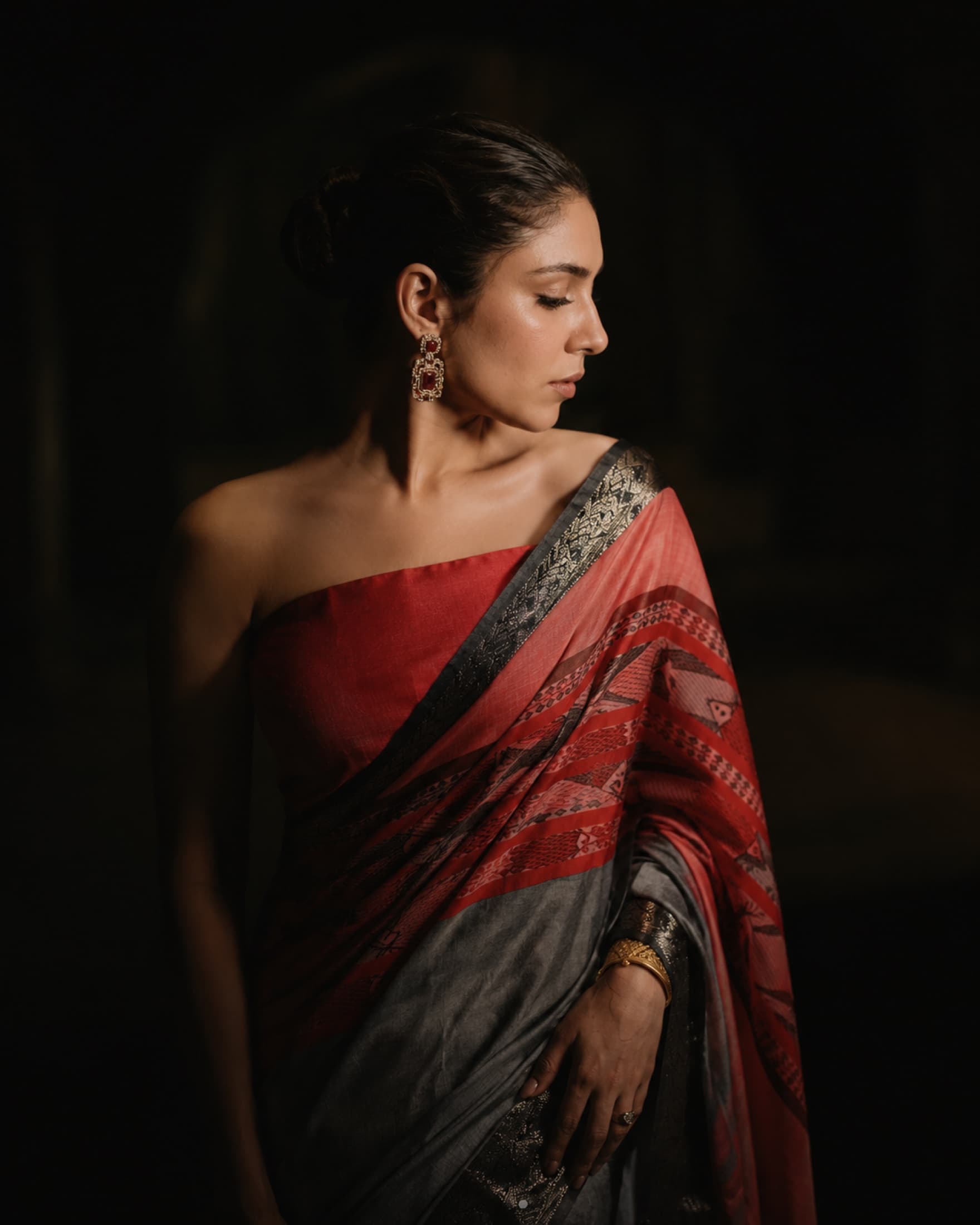
The blouse is a garment, not an accessory
Knowing how to choose a saree blouse begins with function. It must support the drape, remain comfortable against the skin and allow you to sit, reach and move for the length of the occasion. Neckline and sleeve ideas matter, but they cannot rescue a shoulder that slips, an armhole that cuts or a closure under strain.
Treat the saree, blouse and intended drape as one system. The weight of the pallu changes what happens at the shoulder. Fabric thickness changes seam bulk. A deep back changes the support and closure plan. This guide puts those connected decisions in the right order so that style grows from a sound fit rather than competing with it.
If the saree's weight and structure are still unfamiliar, begin with our guide to saree fabrics before deciding how much lining, support or ease the blouse needs.
What a well-fitting saree blouse should do
Fit is not the same as tightness. Use these visible and physical checks during a trial, then describe the exact problem instead of asking only for the blouse to be made looser or tighter.
| Area | What good fit feels like | Problem signs |
|---|---|---|
| Shoulder | The seam sits near the shoulder point and stays in place as the arms move. | The neckline shifts, the shoulder lifts or excess fabric collapses near the armhole. |
| Neckline | The edge lies close without gaping, cutting or changing shape beneath the pallu. | The edge rolls, stands away from the body or pulls when you turn or reach. |
| Bust and darts | The fabric lies smoothly and the shaping points towards, but ends before, the fullest point. | Horizontal drag lines, a floating under-bust area or a dart point that creates a visible peak. |
| Armhole and sleeve | You can raise and bring the arms forward without pinching or pulling the blouse upward. | Cutting at the underarm, restricted reach, sleeve twisting or the entire bodice lifting. |
| Lower edge | The band or hem stays level and secure without rolling, digging or riding up. | The edge flips, shifts above the intended line or leaves pressure marks quickly. |
| Closure | Hooks, zip or ties close without force and remain flat through normal movement. | Gapping between hooks, strain lines, exposed fastenings or a closure that touches the skin sharply. |
01
Start with the occasion and drape
Function first / A blouse that works for the complete look
Begin with the hours you will wear the saree, the amount of movement involved and whether the pallu will be open, pleated or secured. A blouse for a long ceremony, a seated dinner and a short portrait session may need different levels of support, coverage and ease even when the visual idea is similar.
Bring the saree and planned innerwear to the fitting. The pallu can obscure a neckline, add weight at one shoulder or reveal a back detail differently from an isolated blouse trial. Footwear and jewellery also matter when they affect posture, neck space or how freely the arms can move.
Questions for the fitting
- How many hours must the blouse remain comfortable?
- Will the pallu be open, pleated, pinned or changed during the event?
- Which movements—driving, dancing, lifting or sitting on the floor—must be tested?
02
Measure for this design
Body measurements plus ease / Shaping without unnecessary strain
A label size is only a starting point. Blouse drafting can use bust, under-bust, waist, shoulder, armhole, bicep, blouse length and neckline-depth measurements, with additional measures depending on the pattern. Take them over the innerwear intended for the blouse and keep the tape level, close but not compressing the body.
Measurements describe dimensions; ease determines how the finished garment relates to them. A woven blouse still needs enough room for breathing and movement, while a stretch blouse needs a construction and seam choice that can recover without distortion. Recheck measurements when the design, innerwear or body has changed instead of copying an old blouse automatically.
Questions for the fitting
- Which measurements does this particular pattern require?
- Where has wearing ease or stretch been added?
- Is the reference blouse genuinely comfortable, or merely familiar?
03
Match fabric, lining and support
Construction follows material / The intended shape with less bulk
Choose blouse fabric by considering weight, stretch, transparency, surface and the saree's own character. A crisp woven cloth can hold a defined line but may need careful shaping. A light or sheer cloth may need lining. A heavily embellished fabric adds weight and can create bulky seam allowances if every layer is treated alike.
Lining, cups, boning and interfacing are options, not automatic signs of quality. Each should solve a named problem such as opacity, stability or edge support. Ask where support is needed and how it changes breathability, cleaning and alteration. The inside should remain as considered as the visible surface.
Questions for the fitting
- Does the fabric need lining for opacity, comfort or structure?
- Where will embroidery or border placement create extra bulk?
- Can the finished blouse be cleaned safely with the saree and its embellishment?
04
Choose the neckline with the pallu
Visibility, support and preference / A deliberate relationship between blouse and drape
Judge a neckline in the complete saree look. A front edge may disappear beneath a pleated pallu, while the same pallu can place friction or weight near the shoulder. Front and back depth also affect strap coverage, fastening placement and how stable the garment feels through movement.
There is no universally flattering neckline. Use the line you enjoy, then engineer it for your preferred coverage and support. Mark the actual finished depth during the fitting, check it while sitting and turning, and confirm that jewellery does not crowd or catch the edge.
Questions for the fitting
- How much of the neckline remains visible after draping?
- Does the chosen innerwear stay concealed as you move?
- Will the pallu, necklace or border rub against the edge?
05
Plan sleeves around movement
Reach before sleeve length / Comfort that survives the event
Sleeve length changes the visual balance, but armhole shape, sleeve cap and bicep room determine much of the movement. A larger armhole is not automatically freer: if it sits too low or lacks the right shaping, lifting the arm can pull the whole blouse upward.
Test the exact sleeve rather than relying on a sleeveless sample. Reach forward, lift both arms, touch the opposite shoulder and hold the pallu as you expect to wear it. Decorative edges and tight sleeve bands should be assessed after several minutes, not only in a still mirror pose.
Questions for the fitting
- Can you reach forward and overhead without the blouse riding up?
- Does the sleeve twist or cut at the bicep and underarm?
- Will jewellery, embroidery or a border catch during movement?
06
Finish for comfort and alteration
Secure seams and serviceable details / A blouse that can be worn again
Front hooks, back hooks, zips and ties each change dressing ease, visual line and alteration options. The right choice is the one that stays flat, can be operated comfortably and suits the fabric's thickness and strain. A closure should not be used to force a blouse smaller than its pattern allows.
Inspect seam softness, edge finishing, hook guards, thread ends and the allowance retained for future alteration. Garment seams must balance strength, appearance, stretch, bulk and softness; areas against the skin deserve particular attention. A polished exterior does not compensate for a sharp fastening or abrasive seam inside.
Questions for the fitting
- Can the closure be fastened without pulling the garment out of shape?
- Are skin-facing seams and fastenings smooth and covered?
- Has useful seam allowance been retained for later adjustment?
What to include in your tailor brief
01
The saree, blouse fabric and the drape you intend to use
02
The exact innerwear and any cups or support you expect inside the blouse
03
Front and back reference photographs, with the details you actually want marked
04
Your preferred blouse length, front depth, back depth and sleeve length
05
The event duration and movements the blouse must accommodate
06
Closure preference and whether you need to dress without assistance
07
Known sensitivities to lining, seams, hooks, elastic or embellishment
08
The fitting date, final delivery date and alterations included
The five-minute final fitting
- Drape the actual saree. Pin or arrange the pallu exactly as planned.
- Move through the event. Sit, reach, lift the arms, turn and use your phone or handbag.
- Wait before judging. Keep the blouse on long enough to notice pressure, abrasion or shifting.
- Photograph front, side and back. Look for drag lines, gaping and an uneven lower edge.
- Mark one change at a time. Confirm how each alteration affects the neckline, sleeve and closure around it.
Complete the trial with the steps in our saree draping guide. For formality, duration and venue decisions, continue with the occasion guide.
Begin with movement
Let the blouse support the saree—and the life you wear it into.
Explore ANURRAKTI's ready-to-wear pieces, designed as complete expressions rather than an afterthought to the drape.
Explore ready to wearSources and further reading
This guide translates broad garment-construction principles into a blouse-fitting checklist. Pattern, support and alteration decisions must be made for the individual wearer, fabric and design by a qualified tailor or fitter.
Continue reading
Related saree guides
The Saree Guide / 06
Saree Fabrics Explained: Silk, Cotton and Blends
A practical vocabulary for silk, cotton, linen, blends and man-made fibres—and the construction terms that are often mistaken for fibres.
The Saree Guide / 05
How to Care for Sarees: Washing and Storage
A careful guide to airing, cleaning, drying and storing sarees—built around the textile rather than one universal washing rule.
The Saree Guide / 04
How to Drape a Saree: A Step‑by‑Step Guide
A calm, beginner-friendly guide to the common Nivi drape—from preparing the foundation to setting the pleats and pallu securely.