
Saree Fabrics Explained: Silk, Cotton and Blends
A practical vocabulary for silk, cotton, linen, blends and man-made fibres—and the construction terms that are often mistaken for fibres.
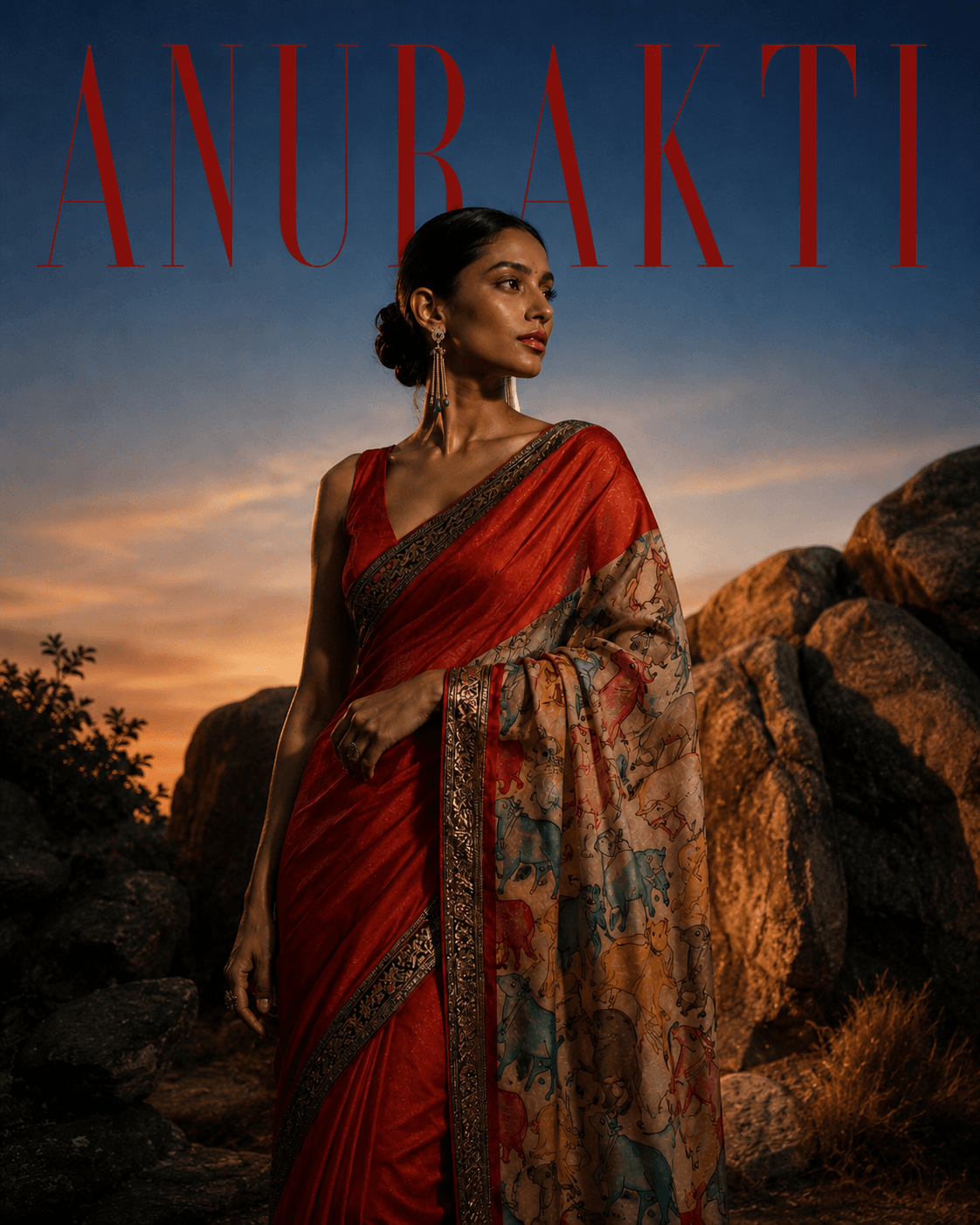
A fabric name rarely tells the whole story
Saree fabrics are often described with a mixture of fibre names, weaving terms, regional traditions and surface effects. Silk and cotton identify raw materials. Satin identifies a weave. Crepe describes a characteristic surface that can be achieved in different ways. Banarasi names a weaving tradition connected with place, not one fixed fibre composition.
That is why two sarees sold under the same familiar word can feel, fall and require care very differently. A useful fabric description should tell you what the saree is made from, how it is constructed, what has been added to its surface and how the finished cloth behaves. This guide gives you the vocabulary to ask for those details.
Six terms that make fabric descriptions clearer
01 / Fibre
The raw material used to make yarn, such as silk, cotton, flax, viscose or polyester.
02 / Yarn
Fibres or filaments prepared and twisted or combined into the strands used for weaving.
03 / Construction
How yarns are arranged to make cloth, including weave structure, density and the relationship of warp and weft.
04 / Surface
What is woven, printed, dyed, embroidered, painted, embellished or finished onto the cloth.
05 / Blend
Two or more fibres used together, either within a yarn or as different yarns across the fabric.
06 / Hand
The way a textile feels and behaves—soft, crisp, dry, smooth, springy, heavy or fluid.
These material terms sit alongside regional and weaving traditions, but they are not interchangeable. Our guide to the types of sarees in India explains how place, technique and textile identity can come together in a saree name.
01
Silk
Natural protein fibre / Lustre, strength and wide variation
Silk is not one uniform saree fabric. India produces mulberry, tasar, eri and muga silks, and the yarns made from them can differ in colour, texture, continuity and lustre. Degumming, spinning, weaving, dye and finish change the result again, so the word silk alone cannot predict whether a saree will be glossy and fluid or textured and structured.
Ask whether the silk is filament or spun, which variety is used and whether the saree contains other fibres. Also notice the fabric's body: a dense ceremonial silk and a light silk ground may share a fibre category while demanding very different drapes and care.
Questions to ask
- Which silk variety and yarn type are used?
- Is the saree pure silk or a blend, and what are the percentages?
- What care method is recommended for the complete saree?
02
Cotton
Natural cellulosic fibre / Absorbent, versatile and construction-dependent
Cotton is closely associated with Indian textile history, but cotton sarees range from very fine, airy cloth to substantial, crisp weaves. Yarn count, twist, density, starch, finishing and climate all influence how the saree feels. Cotton's natural absorbency and breathability are useful qualities, yet the fabric construction determines how much air actually moves through the cloth.
A starched cotton may arrive architectural and soften over time, while a fine cotton may gather into compact pleats immediately. Ask whether the finish is intended to remain, whether the dye is stable and how the maker expects the saree to change through wear and cleaning.
Questions to ask
- Is the cotton fine, dense, starched, handspun or mill-spun?
- How transparent is the cloth and what foundation does it need?
- Will the finish soften or the dimensions change with washing?
03
Linen
Flax-based natural cellulosic fibre / Dry hand, visible texture and characteristic creasing
Linen yarn is made from flax and is recognised for a dry, cool hand and a surface that can show natural slubs. In a saree, its feel depends on yarn fineness, weave density and whether it is blended with cotton, silk or another fibre. Creasing is part of linen's behaviour rather than automatic evidence of poor quality.
The term linen is also used loosely in retail descriptions, so ask for the actual composition. A linen-look saree, linen blend and pure linen saree are not interchangeable descriptions and may behave differently in drape, pressing and care.
Questions to ask
- Is it pure flax linen, a linen blend or only a linen-like finish?
- What percentage of each fibre is present?
- How should creases be pressed without changing the surface?
04
Natural-fibre blends
Silk-cotton, cotton-linen and related combinations / Properties shaped by both fibre and construction
Blending natural fibres can create a cloth with a balance that neither fibre produces alone. Silk-cotton may place silk in one yarn direction and cotton in another, or combine fibres within yarns. Cotton-linen can vary just as widely. The order of the words does not guarantee which fibre dominates.
Do not accept 'best of both' as a complete explanation. Ask for percentages and construction, then judge the finished cloth itself. A blend's drape, sheen, absorbency and care cannot be calculated from its name without knowing how the yarns and finish were used.
Questions to ask
- What are the fibre percentages?
- Are different fibres used in warp and weft or blended within the yarn?
- Which fibre determines the recommended cleaning method?
05
Regenerated cellulosic fibres
Viscose, modal and related fibres made from cellulose / Often fluid, smooth and highly variable
Viscose and modal are man-made cellulosic fibres: their cellulose source distinguishes them from petroleum-derived synthetics, while their manufacturing process distinguishes them from directly spun natural fibres. In sarees they may be used alone, in blends or to create a particular fall and surface.
The category contains significant variation. Yarn form, weave, finish and blend affect strength, shrinkage, sheen and care. A seller should name the actual fibre rather than using vague phrases such as art silk without composition information.
Questions to ask
- Which cellulosic fibre is present, and in what percentage?
- Has the cloth been finished to add sheen, softness or crispness?
- What are the wet-cleaning and shrinkage instructions?
06
Synthetic fibres
Polyester, nylon and related manufactured fibres / Durable possibilities with finish-dependent feel
Polyester and nylon may appear in sarees as the primary fibre, a blend component, an embroidery thread or a substitute for a more expensive material. They can be engineered into crisp, smooth, sheer or textured cloth, so 'synthetic' does not describe one hand or appearance.
Evaluate the finished textile instead of assuming either superiority or inferiority from the category. Check comfort in the expected climate, static, transparency, heat sensitivity and care. Accurate composition still matters because it shapes how the saree responds to pressing and cleaning.
Questions to ask
- Is the fibre used in the body, border, surface work or all three?
- How does the fabric feel after several minutes against the skin?
- What heat and care restrictions apply?
Six fabric terms that are not fibres
Familiar names may describe a weave, surface or fabric structure rather than the fibre itself. Ask for the exact composition instead of assuming it from the term alone.
| Term | What it describes | What to ask |
|---|---|---|
| Chiffon | A light, sheer cloth whose soft movement depends on fine yarns, twist and construction; it may be made from silk or man-made fibres. | What is the fibre composition and how transparent is the finished saree? |
| Georgette | A light cloth with a grainy crepe character, made in silk or man-made fibres and produced in different weights. | Is it silk georgette, viscose georgette, polyester georgette or a blend? |
| Organza | A sheer, crisp construction that may use silk or synthetic filament yarns; fibre and density determine its hand. | Which fibre creates the crispness, and is the finish permanent? |
| Crepe | A pebbled or crinkled surface produced through yarn, weave or finishing choices rather than one particular fibre. | Which fibre and process create the crepe effect? |
| Satin | A weave structure known for a smooth, often lustrous face; satin can be woven from silk, polyester or other fibres. | What is the fibre content beneath the satin surface? |
| Tissue | A retail and textile term often used for light, luminous cloth that may combine silk, metallic-effect or man-made yarns. | What exactly creates the sheen, and how should the metallic or delicate yarns be cared for? |
A practical saree fabric checklist
- Confirm the composition. Ask for the percentage of every fibre in the saree.
- Name the construction. Identify the weave, surface treatment or finishing technique separately.
- Understand the hand. Check approximate weight, transparency, texture and how the fabric falls.
- Check every component. The body, border, pallu and blouse piece may not share one composition.
- Read the care instructions. Decoration, dye and finishing can change how the whole saree must be handled.
- Verify meaningful claims. Ask for provenance and production details when handloom, region or technique matters to you.
Once the material is clear, use our silhouette guide to consider structure and drape. Then save the correct routine in the saree care guide.
Read the cloth closely
Choose a saree as a complete textile, not a single familiar word.
Explore ANURRAKTI's current one-of-one sarees and observe how fibre, surface, border and pallu work together in each composition.
Explore collectionsSources and further reading
This guide explains broad material categories. A fibre name alone does not verify quality, origin, handloom production or care requirements; request exact composition and construction information for the individual saree.
Continue reading
Related saree guides
The Saree Guide / 05
How to Care for Sarees: Washing and Storage
A careful guide to airing, cleaning, drying and storing sarees—built around the textile rather than one universal washing rule.
The Saree Guide / 04
How to Drape a Saree: A Step‑by‑Step Guide
A calm, beginner-friendly guide to the common Nivi drape—from preparing the foundation to setting the pleats and pallu securely.
The Saree Guide / 03
How to Choose a Saree for Your Body Type
A body-positive guide to fabric behaviour, scale, borders, pleats, pallus and blouse proportions—with experiments instead of restrictions.